
Ask “is vibe coding bad” and you get a fight. One camp calls it the democratization of software. The other quotes Andrej Karpathy on technical debt, security holes, and losing intellectual ownership of your own systems. Here is the thing: both camps are right, and they are not actually disagreeing. They are describing vibe coding with and without restraint.
What vibe coding actually is
Vibe coding means describing what you want in plain language and letting an AI agent build it, working from the vibe of the result rather than the details of the code. For prototypes, personal tools, and exploring an idea, it is genuinely great. Speed and coverage are the point, and being a little wrong is fine because you are going to throw most of it away.
Where it goes wrong
The critique is real, and it is worth stating plainly. Ungoverned vibe coding produces technical debt (piles of code nobody designed), security vulnerabilities (secrets in the frontend, no input checks), and a loss of ownership (a system that works until it breaks, and then nobody knows why). But notice what every one of those failures has in common. None of them is caused by speed. They are caused by an agent with no guardrails: one that guesses instead of asking, builds the biggest version instead of the smallest, and calls the job done before anything ran.
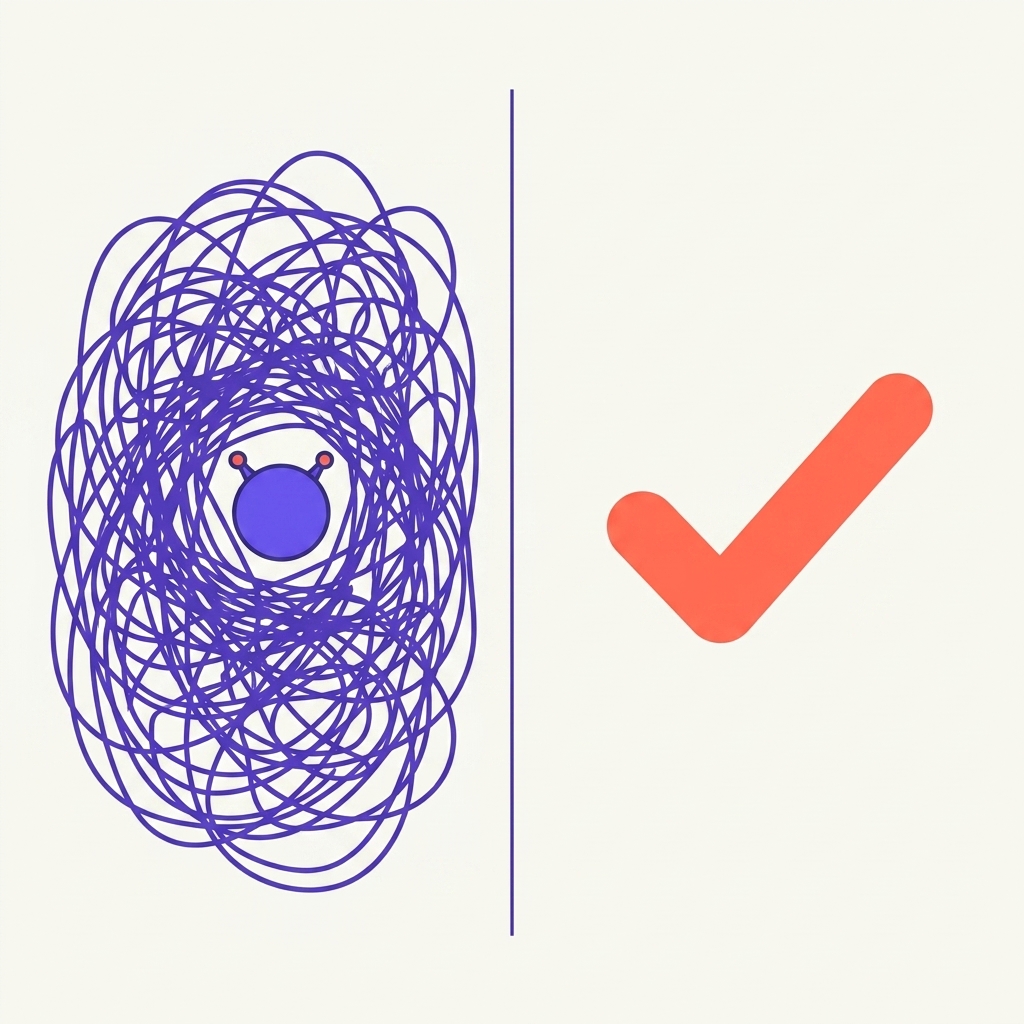
The line between fast-and-fine and fast-and-dangerous
The honest rule of thumb: vibe coding is fine right up until real users, real data, or money depend on the result. A weekend prototype? Vibe away. The checkout flow that takes payments? That is where unreviewed AI output stops being fast and starts being a liability. The mistake is not using AI. It is using it in the same loose mode for the throwaway idea and the thing strangers will rely on.
How to vibe code without the downside
You do not have to choose between speed and safety. You put guardrails on the agent and keep both:
- Make it ask before it builds. Most bad output starts with a wrong assumption the agent never checked with you.
- Make it build the smallest thing that works, not the most impressive one it can imagine. Less code is less debt.
- Make it prove the change runs before it says done, with its own eyes, not “this should work.”
- Review the diff against your goal. Thirty seconds of looking catches the scope creep and the security foot-gun.
Do that and vibe coding is not bad at all. It is fast, and it is fine, because the parts that made it dangerous are gone. That is the whole idea behind kitstarter: it turns those guardrails into the agent’s default behavior so you keep the speed and drop the debt. Vibe coding was never the problem. Vibe coding with no rules was.
Common questions
Is vibe coding actually bad? Vibe coding is not inherently bad. It is fast and genuinely useful for prototypes and small tools. It becomes bad when it is ungoverned: when the agent guesses instead of asking, overbuilds, and ships code nobody reviewed. The danger is not the speed, it is the missing guardrails.
When is vibe coding fine and when is it risky? It is fine for throwaway prototypes, personal tools, and exploring an idea. It is risky the moment real users, real data, or money depend on the result, because that is when unreviewed AI code turns into technical debt, security holes, and systems nobody understands.
How do you vibe code safely? Put guardrails on the agent: make it ask before it builds, make the smallest change that works, prove the change actually runs before calling it done, and review the diff against your goal. You keep the speed of vibe coding and lose the parts that create debt.
Keep the speed, lose the debt
kitstarter makes your AI coding agent ask before it builds, stay lean, and not look AI-made, so vibe coding stays fast and stops being dangerous.